Trusted Care for Your Child Starts Here!

-
Name :
Dr. Neha Agrawal
-
Specialization :
Pediatrician & Neonatologist
-
Experience :
12+ Years in Child Healthcare
-
Location :
Noida / Ghaziabad
Understanding NICU: When Does a Newborn Need Special Care?
The birth of a baby is usually associated with joy and celebration. However, in some cases, newborns require extra medical attention immediately after birth. This is where the Neonatal Intensive Care Unit (NICU) plays a crucial role. For many parents, the idea of NICU care can feel overwhelming, but understanding its purpose and processes can bring reassurance and clarity.
With advancements in pediatrics and neonatology, specialists like Dr. Neha Agrawal are equipped with the latest knowledge and technology to provide comprehensive care to newborns who need it most.
What is NICU?
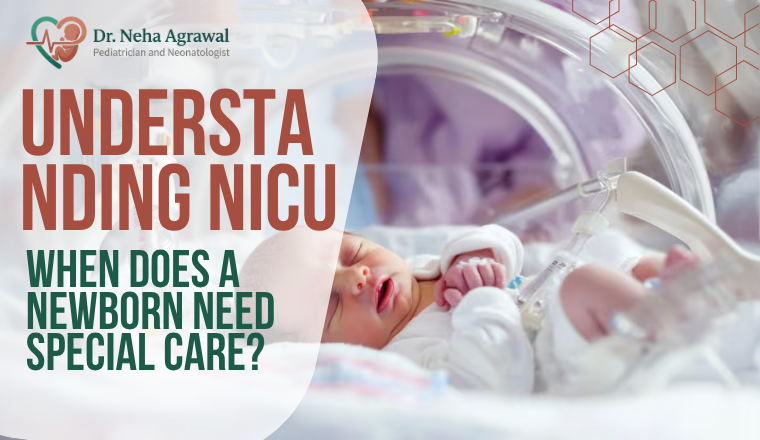
The NICU is a specialized medical unit designed to care for newborns with health complications. It is staffed by highly trained neonatologists, pediatricians, nurses, and respiratory therapists who work together to provide round-the-clock monitoring and treatment.
NICUs are equipped with advanced medical technologies such as incubators, ventilators, and monitoring systems that help maintain a stable environment for babies who are not yet ready to thrive on their own.
When Does a Newborn Need NICU Care?
Not every baby requires NICU admission, but certain conditions make specialized care essential. Here are some of the most common reasons:
1. Premature Birth
Babies born before 37 weeks of pregnancy often have underdeveloped organs. Premature infants may face challenges related to breathing, feeding, and maintaining body temperature, making NICU care critical for their survival and growth.
2. Low Birth Weight
Newborns weighing less than 2.5 kilograms may require additional monitoring and nutritional support. These babies are more vulnerable to infections and developmental delays.
3. Breathing Difficulties
Respiratory distress is one of the leading reasons for NICU admission. Conditions like immature lungs or infections can make it difficult for newborns to breathe independently, requiring oxygen support or ventilators.
4. Infections and Sepsis
Newborns have immature immune systems, making them susceptible to infections. Early detection and prompt treatment in the NICU can prevent serious complications.
5. Birth Complications
Complications during delivery, such as lack of oxygen (birth asphyxia), can impact a baby’s health. Immediate NICU care ensures proper monitoring and intervention.
6. Jaundice Requiring Treatment
While mild jaundice is common, severe cases may need phototherapy or other treatments available in the NICU to prevent long-term damage.
7. Congenital Conditions
Babies born with structural or genetic conditions often require specialized medical care and observation in a NICU setting.
What Happens Inside the NICU?
The NICU environment may look intimidating at first, with machines, alarms, and medical staff constantly attending to babies. However, every element is designed to support the newborn’s development and recovery.
- Continuous Monitoring: Vital signs such as heart rate, breathing, and oxygen levels are tracked closely.
- Temperature Control: Incubators help maintain the baby’s body temperature.
- Nutritional Support: Feeding may be provided through tubes if the baby cannot feed normally.
- Respiratory Assistance: Oxygen therapy or ventilators support breathing when needed.
Each baby receives individualized care based on their condition, ensuring the best possible outcomes.
The Role of Parents in NICU Care
One of the most common misconceptions is that parents are passive observers in the NICU. In reality, they play a vital role in their baby’s recovery.
Practices such as kangaroo care (skin-to-skin contact) are encouraged whenever possible. This not only strengthens bonding but also helps regulate the baby’s temperature, heart rate, and breathing.
Parents are also guided on feeding, hygiene, and recognizing their baby’s needs. Emotional support and counseling are often provided to help families cope with the stress of having a baby in intensive care.
How Long Does a Baby Stay in NICU?
The duration of a NICU stay varies depending on the baby’s condition. Some newborns may need only a few days of observation, while others, especially premature infants, may require weeks or even months of care.
The goal is to ensure that the baby can:
- Breathe independently
- Maintain body temperature
- Feed effectively
- Gain adequate weight
Only when these milestones are achieved is the baby ready to go home.
Advancements in Neonatal Care
Modern NICUs are a testament to how far medical science has progressed. With cutting-edge technology and evidence-based practices, survival rates and long-term outcomes for high-risk newborns have improved significantly.
Neonatologists like Dr. Neha Agrawal stay updated with the latest research and treatment protocols, ensuring that every baby receives the highest standard of care.
From non-invasive ventilation techniques to advanced infection control measures, today’s NICUs focus not just on survival but also on quality of life and long-term development.
Common Myths About NICU
- “NICU means something is seriously wrong.”
Not always. Many babies are admitted for precautionary monitoring and recover quickly. - “Parents cannot touch their baby.”
In most cases, controlled interaction is encouraged and beneficial. - “NICU babies will have lifelong issues.”
With proper care, many NICU graduates grow up healthy and thrive.