Trusted Care for Your Child Starts Here!

-
Name :
Dr. Neha Agrawal
-
Specialization :
Pediatrician & Neonatologist
-
Experience :
12+ Years in Child Healthcare
-
Location :
Noida / Ghaziabad
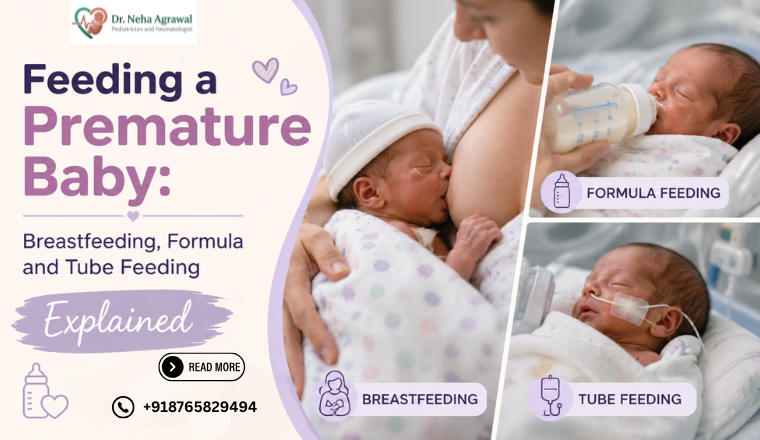
Feeding a Premature Baby: Breastfeeding, Formula and Tube Feeding Explained
Bringing home a baby who arrived earlier than expected changes almost everything about those first weeks — and feeding is often the biggest source of worry for new parents. Premature babies don't feed the way full-term babies do, and that's completely normal. Their tiny bodies are still learning skills that most babies develop in the womb, like sucking, swallowing, and breathing in the right rhythm.
If you're staring at a feeding chart in the NICU feeling overwhelmed, take a breath. This guide breaks down the three main feeding methods — breastfeeding, formula, and tube feeding — in plain, human language, so you understand exactly what's happening and why.
Why Premature Babies Feed Differently
Babies usually master the suck-swallow-breathe coordination around 34 weeks of gestation. Before that, their nervous system simply isn't ready to manage all three at once safely. This is why a baby born at 28 or 30 weeks may need help feeding for weeks, while a baby born at 35 weeks might only need a little extra support.
Premature babies also tire quickly, have smaller stomachs, and may have underdeveloped digestive systems — all of which shape how, when, and how much they can safely eat.
Breastfeeding a Premature Baby
Breast milk is often considered especially valuable for premature babies because it's easier to digest and contains antibodies that help protect a vulnerable immune system. But breastfeeding a preemie looks different from breastfeeding a full-term baby.
Pumping comes first for many moms. If your baby isn't strong enough to latch yet, pumping breast milk and feeding it via tube or bottle keeps your supply going until the baby is ready.
Skin-to-skin contact (kangaroo care) helps regulate the baby's breathing and heart rate, and often improves feeding readiness over time.
Patience is key. Some premature babies take weeks to latch effectively — this doesn't mean breastfeeding won't work, just that it needs extra time and support.
Lactation consultants and your baby's care team can help assess readiness and guide you through it step by step. This is also where many parents choose to consult the Best Pediatrician in Noida. For a coordinated feeding plan alongside the NICU team.
Formula Feeding
Sometimes breast milk isn't available in sufficient quantity, or a baby needs specialized nutrition that fortified formula provides. Preemie-specific formulas are often calorie-dense, designed to help catch-up growth in babies who need extra support gaining weight.
Formula feeding isn't a failure — for many families it's simply the safest and most practical path, especially when combined with any available breast milk. Your baby's medical team will usually recommend a specific formula type based on gestational age, weight, and digestive tolerance.
Tube Feeding (Gavage Feeding)
For babies who can't yet coordinate sucking and swallowing safely, tube feeding is a temporary but essential bridge. A soft, thin tube is passed through the nose or mouth into the stomach, delivering breast milk or formula directly.
This might sound scary at first, but it's an extremely common and safe practice in NICUs worldwide. Tube feeding ensures your baby gets consistent nutrition while their body finishes developing the reflexes needed for oral feeding. As babies mature, they gradually transition to bottle or breastfeeding, often through a mix of both — called "co-feeding."
Signs Your Baby Is Ready to Progress
Every baby moves at their own pace, but care teams typically look for:
Steady weight gain
Improved alertness during feeding attempts
Coordinated sucking and swallowing without choking
Stable breathing and heart rate during feeds
Parents often ask their care team, including the Best Premature Baby Specialist in Noida. How to recognize these milestones at home once a baby is discharged, since progress can continue well after leaving the hospital.
Common Worries Parents Have
"Is my baby getting enough?"
Weight checks and feeding logs help the medical team adjust volumes as needed — trust the process, and don't hesitate to ask questions at every visit.
"Will tube feeding delay breastfeeding?"
Not necessarily. Many babies who start with tube feeding go on to breastfeed successfully once they're developmentally ready.
"How do I know which feeding method is right long-term?"
This is exactly the kind of question worth bringing to the Best Pediatrician in Noida. Since every premature baby's timeline is different and needs individual assessment rather than a generic schedule.
After Discharge: Feeding at Home
Coming home doesn't mean feeding challenges disappear overnight. Many parents continue working with a Best Premature Baby Specialist in Noida. For follow-up visits to track weight gain, adjust formula fortification, or fine-tune breastfeeding support. Regular pediatric check-ins in these early months are just as important as the care your baby received in the NICU.
If you're ever unsure whether your baby's feeding pattern, weight gain, or behavior is on track, don't wait for the next scheduled appointment — reach out to the Best Pediatrician in Noida. Or the Best Premature Baby Specialist in Noida. Promptly can offer real reassurance and catch small issues early.
The Bottom Line
There's no single "right" way to feed a premature baby — breastfeeding, formula, and tube feeding each play an important role depending on your baby's stage of development. What matters most is working closely with your care team, staying patient with the process, and celebrating every small feeding milestone. With the right guidance from the Best Pediatrician in Noida. and the Best Premature Baby Specialist in Noida. Most premature babies transition smoothly to full oral feeding — it just takes the time it takes.
FAQs
1. When can premature babies start breastfeeding?
Usually around 34 weeks gestation, once sucking, swallowing, and breathing coordinate safely.
2. Is tube feeding harmful for babies?
No, it's a safe, standard NICU practice for babies not yet ready for oral feeding.
3. Do premature babies need special formula?
Often yes — calorie-dense, preemie-specific formulas support faster catch-up growth.
4. How do I know if my baby is feeding enough?
Regular weight checks and pediatric follow-ups are the best way to track this.
5. Can a baby switch between tube, bottle, and breastfeeding?
Yes, many babies use a mix of methods before fully transitioning to oral feeding.